


Spark: Daily Learning Puzzles
4.5192.00 Reviews
App Specs
- Version
- 1.41.0
- Updated On
- License
- Free
- Downloads
- 100,000+
- Developer
- The Mind Company
- Categories
- Education
- Platform
- Android
Screenshots
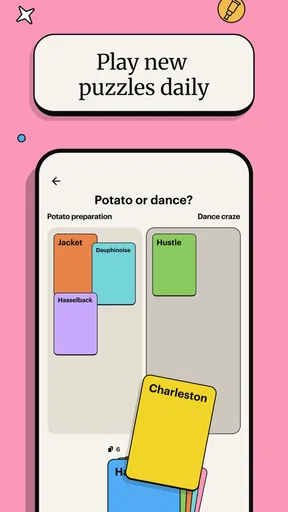
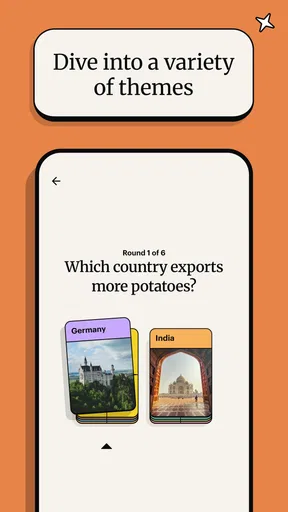

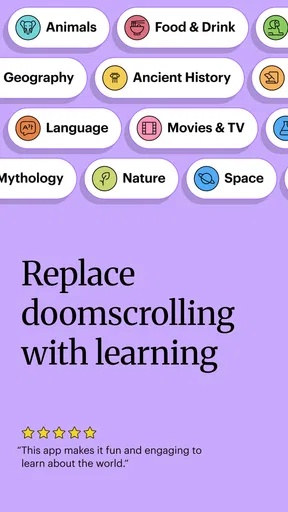
 Analysis by AppCompare
I tried Spark: Daily Learning Puzzles as an education app with a simple promise: turn a small amount of spare time into a chance to learn. That sounds modest, and in practice it is. This is not a full course platform, a digital textbook, or a replacement for structured study. It is better understood as a lightweight puzzle habit from The Mind Company, designed for people who enjoy learning through short challenges rather than long lessons.
My first impression was that the format makes the app easy to approach. The store summary, “Learn something new, one puzzle at a time,” describes the experience more accurately than a grand claim about mastering a subject. The short description is simply “Spark,” which fits the compact, prompt-driven character of the app. I found it most appealing when I had a few quiet minutes and wanted something more worthwhile than casually scrolling.
How the daily puzzle format feels in real use
The central strength is the low commitment. A puzzle gives me a clear starting point and a natural stopping point, so I do not need to plan a study session before opening the app. That matters on a commute, during a lunch break, or while waiting for an appointment. Instead of asking me to choose a course, set a target, and work through a large lesson library, Spark makes the decision smaller: open it, think about the challenge, and move on when I am done.
That convenience also defines the app’s limits. Short puzzles can encourage curiosity, recall, and careful reading, but they do not automatically create deep knowledge. I would use it as a daily mental warm-up or a way to discover topics I want to explore further, not as my only tool for learning a language, preparing for an exam, or building a professional skill.
The puzzle approach suits people who like active participation. Reading an explanation passively can feel productive without testing whether anything stayed in memory. A question or challenge at least asks me to make a choice, retrieve an idea, or notice a distinction. Even when I get something wrong, that small moment of correction is more memorable than simply skimming another article.
There is a useful psychological trade-off here. Because each session feels manageable, I am more likely to return than I would be to a demanding course. However, the same ease can make the habit feel complete when it is really only a starting point. My advice is to treat an interesting puzzle as a prompt: if it raises a question, write that question down and investigate it later instead of assuming the short interaction is the whole lesson.
Where the connection becomes part of the experience
Connectivity matters most at the moment I want to begin. A daily puzzle app naturally depends on fresh content or an active session, so a weak connection can turn an otherwise convenient break into a pause while the app catches up. I would be comfortable opening Spark when I have a reliable mobile signal or Wi-Fi, but I would not build an important study plan around being able to use it in every dead zone.
Worth Reading Before You Choose

EA SPORTS FC Mobile 26 Is a Bigger Football Game, but It Takes Time

Flipboard Shows What News Apps Must Do Beyond the Feed

Switching to Android Auto Means Rethinking Your Driving Routine

Google Calendar Makes a Crowded Week Easier to Manage

Ludo King Makes the Most of the Minutes Between Plans

Baby Panda World Brings Quick Play to Modern Phones, but Its Game Library Feels Busy
This is especially relevant in places where the phone frequently changes between networks. On a train, in a crowded venue, or inside a building with patchy reception, the experience may feel less predictable than a downloaded book or a saved course lesson. The appeal of the app is immediacy, and immediacy is harder to guarantee when the network is unstable.
I would also avoid treating the app as a dependable emergency distraction if I know I will be offline. A paper puzzle book, downloaded reading material, or a course with clearly saved lessons is a safer choice for a flight or a remote trip. Spark makes sense when connectivity is part of the normal phone routine, not when the phone is being used as an isolated device.
That does not make network access a deal-breaker for me. Most people open education apps in connected environments, and the short format means I am unlikely to spend a long session waiting for content. Still, it changes where I would recommend it: it belongs in the everyday connected part of my routine rather than in a carefully prepared offline study kit.
Using it on a phone without turning learning into another chore
The mobile context is where this app makes the most sense. A phone is always close, and a puzzle can fit between tasks without requiring a desk, notebook, or long uninterrupted block. I found that the best use is not to force a fixed study period but to attach the app to an existing pause, such as after breakfast or before putting the phone away at night.
There is an important difference between opening it intentionally and reaching for it automatically. If I start a session while distracted, I may rush through the challenge simply because another notification appears. For better results, I would silence interruptions for a few minutes and answer before looking for outside help. The value is not only in seeing the solution; it is in giving my own memory a chance to work first.
A practical routine is to keep a tiny note with three headings: “new idea,” “mistake,” and “follow-up.” After a puzzle, I would record only one item under one heading. This prevents the app from becoming a stream of disconnected facts. It also creates a personal trail of topics worth revisiting, which is something a short daily format does not always provide by itself.
Spark is also a reasonable option for family use because its content rating is Everyone. That does not mean every child will find every puzzle equally accessible, and I would still guide younger users toward discussing unfamiliar answers instead of treating the app as an authority that needs no context. For adults, the rating is reassuring but not a substitute for judging whether the learning style matches the person using it.
The app is free to start, which lowers the barrier to trying it. There are in-app purchases ranging from $2.99 to $79.99 per item, so I would check the purchase screen carefully before committing to anything. The wide range suggests that optional spending may matter to the overall experience for some users. My own approach would be to use the free experience long enough to decide whether the habit genuinely fits before considering a purchase.
What happens when a session is interrupted
Phone use rarely happens in perfect conditions. A call arrives, the screen locks, another app takes focus, or the signal drops just as I am working through a challenge. With a short puzzle, interruption is less painful than losing progress in a long lesson, but it can still break concentration. I prefer this format to a lengthy lecture in that respect: recovery should be mentally lighter because the commitment is smaller.
My practical rule is not to start a puzzle when I know I have only a few seconds. Waiting at a checkout may sound like an ideal moment, but if the line moves immediately, the session becomes fragmented. A slightly longer pause is better because I can think about the answer rather than tap through it hurriedly.
Connectivity adds another layer to recovery. If the app does not respond as expected, I would first check whether the phone has a stable connection, then close and reopen the app rather than repeatedly tapping the same control. I would also avoid assuming that a delayed screen means the answer failed to register. A calm restart is less frustrating than turning a small learning activity into a technical battle.
This is one reason I would not use Spark for high-stakes revision. If I need guaranteed access to a particular lesson, a saved document or dedicated course tool is more appropriate. Spark’s strength is flexibility, and flexible tools are usually less suitable when every minute and every result must be controlled.
There is a positive side to the lightweight design. An interruption does not destroy an entire evening’s work because the app is not asking for an extended lecture or a long chain of exercises. I can simply return later and re-establish the habit. For me, that makes the app forgiving, provided I accept that it is a casual learning companion rather than a formal record of academic progress.
Keeping mobile data use sensible
Because the app is built for frequent phone access, I would use it thoughtfully on a limited data plan. The safest habit is to open it when connected to Wi-Fi whenever that is convenient, especially if I am checking it repeatedly throughout the day. I would also avoid leaving it open in the background when I am finished, since there is no benefit in keeping a learning app active after the puzzle is complete.
I would not make assumptions about what the app stores locally or how much content it transfers. Instead, I would watch my phone’s normal data-usage settings during the first few days. That gives me a practical answer for my own device and network without relying on guesses. If usage seems higher than expected, I would keep sessions to one deliberate check rather than opening the app every time I feel bored.
This approach also improves the learning quality. Constantly refreshing a daily puzzle feed can turn curiosity into a reflex, while one focused visit encourages me to think about the challenge. The app works better as a small ritual than as an endless source of stimulation.
Battery-conscious users can apply the same principle. I would avoid using Spark while the phone is already under heavy load, such as during navigation or a video call, and I would keep the screen time purposeful. The puzzle format does not require me to remain inside the app for a long period, so there is little reason to stretch a session once I have understood the idea.
Parents may also want to establish a simple rule around purchases and connectivity. Since the app is free but includes paid items, I would make sure the person using it understands which actions can lead to spending. That is not a criticism of the education model; it is ordinary good practice for any free mobile app with optional purchases.
How it compares with familiar learning alternatives
Compared with a textbook, Spark is quicker and less intimidating. A textbook offers depth, structure, references, and the ability to study a specific subject in sequence. Spark offers a much easier entry point and a more playful reason to return. If I want to understand one topic thoroughly, I would choose the book. If I want to keep my curiosity active during small breaks, I would choose the puzzle format.
Compared with video lessons, the app asks more of me in a smaller space. Video is excellent when a teacher’s explanation or a visual demonstration is important, but it is easy to watch without processing. A puzzle makes me participate sooner. On the other hand, it cannot replace the nuance and sustained explanation that a well-made lesson provides.
Compared with flashcards, Spark feels less repetitive and potentially more surprising. Flashcards are better when I need deliberate repetition of a defined set of facts, such as terminology or vocabulary. Spark is better for variety and discovery. I would not use it as my main memorization system, but I could use it to identify the subjects that deserve a more organized flashcard deck.
Compared with a general puzzle game, the educational purpose gives the time a clearer direction. A conventional game may offer deeper progression, richer feedback, or stronger entertainment. Spark’s advantage is that the challenge is tied to learning rather than only performance. That makes it a better choice when I want a useful pause, though not necessarily when I want a highly developed game experience.
Who will get the most from Spark
I would recommend it to curious adults, students who enjoy short revision prompts, and anyone trying to replace a few minutes of aimless phone use with something more active. It is particularly suitable for people who struggle to begin large courses because the first step feels too demanding. The small puzzle creates a gentler doorway into learning.
It can also help someone build a bridge between interest and action. Suppose I am waiting for a friend at a café and open the app. A puzzle introduces an unfamiliar idea, and I note it for later. That evening, I spend ten minutes reading about it from a more detailed source. In that workflow, Spark is not pretending to be the entire education system; it is the trigger that gets me moving.
I would skip it if I need a fixed syllabus, formal assessment, detailed progress tracking, or guaranteed access in places without a dependable connection. I would also look elsewhere if I dislike short challenges or prefer learning from long explanations. People preparing for an exam should choose a tool designed around the exact subject and test requirements, then use Spark only as an occasional mental break.
The app comes from The Mind Company and currently sits at version 1.41.0, with a minimum operating system requirement of 10. That makes checking device compatibility a sensible first step before downloading. It has reached over 100 thousand installs, and its average rating is 4.5 from around 2.8 thousand ratings, with 192 written reviews. Those figures suggest a well-received app with a meaningful user base, while still leaving room for individual preferences to differ.
Its release date, Nov 12, 2025, also places it among relatively new offerings. I see that as a reason to judge it by the current experience rather than by assumptions about how mature the wider product may become. The important question for me is whether the daily puzzle habit is useful today, not whether it resembles a fully developed learning platform.
My connectivity verdict
Spark works best when I have a stable connection, a few uninterrupted minutes, and the right expectations. I like it as a compact education app that turns a phone break into an active question rather than another passive scroll. The network-sensitive moments are manageable in ordinary daily use, but they make it a poor choice for planned offline study unless I have independently confirmed that my intended setup works.
The strongest way to use it is deliberately: open it during a reliable connection, think before checking the answer, record one idea worth following up, and close it when the session is finished. That workflow protects both attention and data while making the short format more meaningful.
For me, the free entry point makes Spark easy to test, and the Everyone rating broadens its appeal. The optional purchases mean I would remain attentive during checkout, especially on a shared family device. I would not recommend paying simply because the app is enjoyable; I would only consider it if the added value clearly supports a habit I already use.
Overall, I would recommend Spark: Daily Learning Puzzles to anyone who wants a small, repeatable learning prompt rather than a complete course. It is not the right tool for deep study, strict exam preparation, or unreliable connectivity. But in a normal connected routine, it offers a pleasant middle ground between serious education software and ordinary mobile entertainment. Its best result is not that one puzzle teaches everything; it is that one puzzle can make me curious enough to keep learning after I put the phone down.
Pros
- Short daily sessions fit easily into busy routines.
- Covers several puzzle styles to keep practice varied.
- Clean interface makes the app simple to navigate.
- Progress tracking can encourage consistent daily use.
- Suitable for users who enjoy learning through quick challenges.
Cons
- Daily content may feel repetitive for frequent players.
- Some puzzles can be frustrating without clearer hints.
- Learning value varies depending on the puzzle category.
- A missed day may reduce the motivation to maintain a streak.
- Certain features may require an internet connection.
FAQs for Spark: Daily Learning Puzzles
What is Spark: Daily Learning Puzzles?
Spark: Daily Learning Puzzles is a mobile app designed to combine short daily challenges with learning and mental stimulation. Instead of offering one long course or a traditional game campaign, it presents puzzle-style activities that can be completed in brief sessions. The experience is suited to users who enjoy testing memory, logic, vocabulary, attention, or general knowledge while building a consistent daily habit.
Is Spark: Daily Learning Puzzles free to download and use?
The app can generally be downloaded without an upfront purchase, but some features, puzzle content, or learning tools may depend on the version available in your region and the developer’s current subscription model. Before confirming a purchase, check the store listing for premium plans, trial conditions, renewal terms, and whether advertisements or limitations apply to free users. Pricing can vary between Android and iOS.
How much time do the daily puzzles take to complete?
Spark is intended for short, repeatable sessions rather than lengthy play periods. Most users should be able to open the app, complete the available daily activities, and review their results in only a few minutes. The exact time depends on the puzzle type, your familiarity with the subject, and whether you replay challenges or explore additional content. It works well as a quick morning, study-break, or evening activity.
Does Spark: Daily Learning Puzzles work offline?
Offline availability may differ depending on the puzzle type and how the app delivers its daily content. Some previously loaded activities could remain accessible without an internet connection, while new daily challenges, progress synchronization, account features, advertisements, or subscription verification may require connectivity. If offline use is important to you, test the app after disabling mobile data and Wi-Fi, and review the latest store description for confirmed requirements.
Is Spark: Daily Learning Puzzles suitable for children and students?
The short puzzle format can be appealing to children, students, and adults who want a more entertaining way to practice thinking skills. However, suitability depends on the difficulty, topics, advertising, in-app purchases, and privacy settings included in the current release. Parents should review the age rating and permissions before installation, and younger users may need supervision when subscriptions, external links, or social features are available.


